Employment Opportunities:
VectraCor is preparing for a 510k clearance on our first product and is recruiting independent representatives and distributors to sell its disruptive products in the United States and Worldwide as approvals are received. If you are interested in an Exclusive Territory, please use the above "Contact Us" button and send your information or call 973-768-0402.
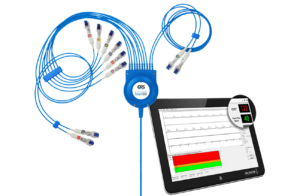
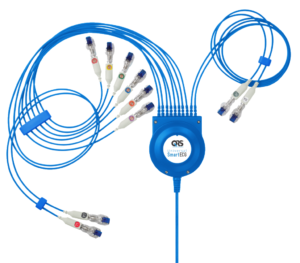
VectraCor, Inc. has developed and patented a technology that will differentiate the current mature cardiac monitoring and ECG market by enhancing the cardiac monitor to actually derive a 12-22 lead ECG from the conventional placement of 5 electrodes, instead of using a separate ECG machine that will require an additional 10 electrodes. The Technology will allow the calculation of a 12, 16, 19, or 22 lead (n-lead ECG) from the measurement of only 3 standard ECG leads or 5 electrodes.
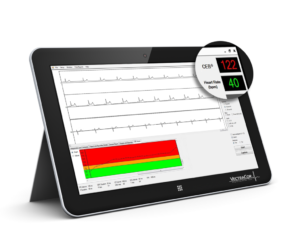
Additionally, and perhaps more importantly, VectraCor’s technology will also incorporate the world's first electrical cardiac marker, VectraplexAMI, that in real-time will detect ECG changes that may be indicative of a patient developing an acute myocardial infarction (AMI- heart attack). The VectraplexAMI will be displayed on the cardiac monitor/ECG machine in the same manner as the heart rate. The current gold standard for detecting an AMI is to (1) place patient on a cardiac rhythm monitor (requiring the placement of 3-5 electrodes on the patient chest wall), (2) measure the standard 12-lead ECG (requiring the placement of an additional 10 electrodes on the limbs and chest wall), and (3) measure the trend of cardiac “serum” blood markers obtained for lab analysis every 4-6 hours during an 18-24 hour period of acute care observation.
VectraCor’s technology will perform all three processes mentioned above with only 5 electrodes and, as a result of our unique algorithms and technology, can detect an AMI in seconds. This advancement will dramatically improve patient care while potentially reducing time and costs. VectraCor’s technology will continue to monitor the patient, beat-to-beat (with the same 5 electrode placement) and derive the patient’s 12-lead ECG (and up to 22 leads) directly from the cardiac rhythm monitor. This dramatically improves current technology and diagnostic capability, while potentially reducing the overall healthcare costs for cardiovascular disease (CVD) which is the #1 cause of death in the US and the world.